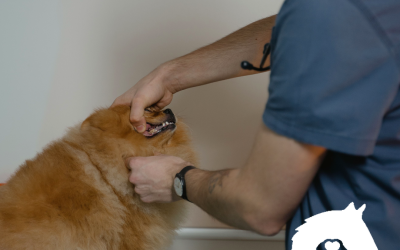
Precision medicine is reshaping cancer care, and veterinary oncology is part of that evolution. In Episode 10 of Sit. Stay. Learn., Dr. Adrienne Wright reviews the 2025 paper Autologous Cancer Vaccines: A Precision Immunotherapy Strategy for Veterinary Cancer Patients and explains why autologous cancer vaccines, or ACVs, are gaining momentum in veterinary cancer immunotherapy.
Listen anywhere you get your podcasts…



What are autologous cancer vaccines?
Autologous cancer vaccines are made from a patient’s own tumor tissue. That gives the immune system exposure to a broad range of antigens that are directly relevant to that individual tumor, rather than relying on a single shared target.
This matters because tumors are heterogeneous. Even cancers with the same diagnosis can behave differently from patient to patient. ACVs offer a precision medicine approach by presenting the immune system with tumor-associated antigens, tumor-specific antigens, neoantigens, and in some cases stromal antigens that may all contribute to disease progression
Why precision medicine matters in veterinary oncology
Traditional cancer treatment often follows a one-size-fits-all model. Precision medicine aims to improve outcomes by tailoring therapy to the patient.
In oncology, that has often meant identifying mutations and matching them with targeted drugs. But cancer is rarely that simple. Many tumors are driven by multiple pathways, which is why vaccine-based immunotherapy is so compelling. A well-designed autologous cancer vaccine may capture more of the tumor’s biologic complexity than a single-target treatment.
Tumor-associated antigens vs. neoantigens
One of the key concepts in this episode is the difference between tumor-associated antigens and tumor-specific antigens.
Tumor-associated antigens are normal proteins found in cancer tissue, but because the body recognizes them as “self,” they may not trigger a strong immune response. Tumor-specific antigens, including neoantigens, are mutated or novel proteins that are more likely to be immunogenic and therefore stronger targets for cancer immunotherapy.
The challenge is that predicting which neoantigens matter most in a veterinary patient is technically difficult and resource-intensive. That is part of what makes ACVs so attractive: instead of trying to predict every meaningful antigen, they use the tumor itself as the source.
Why the Tumor Stroma Matters
The paper also highlights the tumor stroma, which plays a bigger role than many clinicians realize. Stromal tissue does more than support the tumor structurally. It can contribute to immunosuppression and limit effective T-cell infiltration.
That means a vaccine strategy that includes stromal antigens, along with tumor cell antigens, may support a broader and more durable anti-tumor immune response.
How Autologous Cancer Vaccines are Made
Autologous cancer vaccines can be produced in several ways, including:
- whole inactivated tumor cells
- lysed tumor tissue
- tumor tissue combined with immune-stimulating adjuvants
- dendritic cell-based or RNA-based approaches
Different production methods may preserve or lose different aspects of tumor heterogeneity. That is why formulation matters so much when evaluating ACV research or comparing platforms.
What the Veterinary Research Shows
Veterinary medicine has more than 50 years of published work involving ACVs in dogs, cats, and horses. While many studies are small or retrospective, the overall body of evidence points in a promising direction: ACVs appear to be generally well tolerated and may improve outcomes in multiple cancer settings.
The review discusses encouraging data in:
- canine lymphoma
- metastatic hemangiosarcoma
- glioma
- melanoma
- osteosarcoma
Why Checkpoint Inhibitors may be the Next Major Step
One of the most exciting developments in veterinary cancer immunotherapy is combining autologous cancer vaccines with checkpoint inhibitors.
Vaccines stimulate an immune response. Checkpoint inhibitors help overcome tumor-driven immunosuppression. Together, they may create a stronger and more effective anti-cancer response.
In the glioma data discussed in this episode, combining an autologous vaccine with the checkpoint peptide CD200AR-L nearly doubled median survival compared with vaccine alone. That kind of signal is why ACV-plus-checkpoint strategies are drawing so much attention.
The Biggest Challenge: Access and Commercialization
Autologous cancer vaccines are not off-the-shelf products. They require individualized tumor collection, processing, manufacturing, and regulatory navigation. That makes commercialization more difficult than with traditional biologics.
Still, that challenge is also where innovation is happening. Personalized immunotherapy is advancing because companies and researchers are building practical ways to translate promising science into real clinical tools.
Final Thoughts
Autologous cancer vaccines are one of the most promising precision immunotherapy strategies in veterinary medicine today. They are compelling because they use the patient’s own tumor, reflect real tumor heterogeneity, and may integrate well with future combination therapies like checkpoint inhibition.
There is still more to learn. But the direction is clear: veterinary oncology is moving toward more personalized, more targeted, and more immunologically informed treatment strategies.
Want more research breakdowns like this? Follow Sit. Stay. Learn. for practical veterinary science updates designed for busy professionals.
If you’re interested in the full paper, download it here. For questions or further discussion, reach out to adrienne@ardentanimalhealth.com.